
Preview Global Art Project 2026

'world_S E Q U E N C E S'

‘world _ S E Q U E N C E S’ is a participatory, evolving global art project, exhibited in various phases and documented on the project website.
Created by R.J. and developed in collaboration with the KP (Korea Photographers) Gallery in Seoul, the Busan International Photo Festival, and the German Japan Museum / Museum of Contemporary Art ‘Schloss Mitsuko‘, it connects diverse artistic, cultural and intercultural contexts.
In the age of AI, the significant cultural and humanistic value of knowledge exchange between ‘human to human‘ will be largely lost. Therefore, this project is deliberately conceived as a ’storytelling project‘, since knowledge is based on sensory experiences.
The first exhibition will open at the KP Gallery in Seoul in early May 2026, followed by an exhibition from June 20, 2026 at the German Japan Museum / Museum of Contemporary Art ‘Schloss Mitsuko‘, marking the beginning of an ongoing artistic transformation process.
Dynamic, contextual updates will follow.

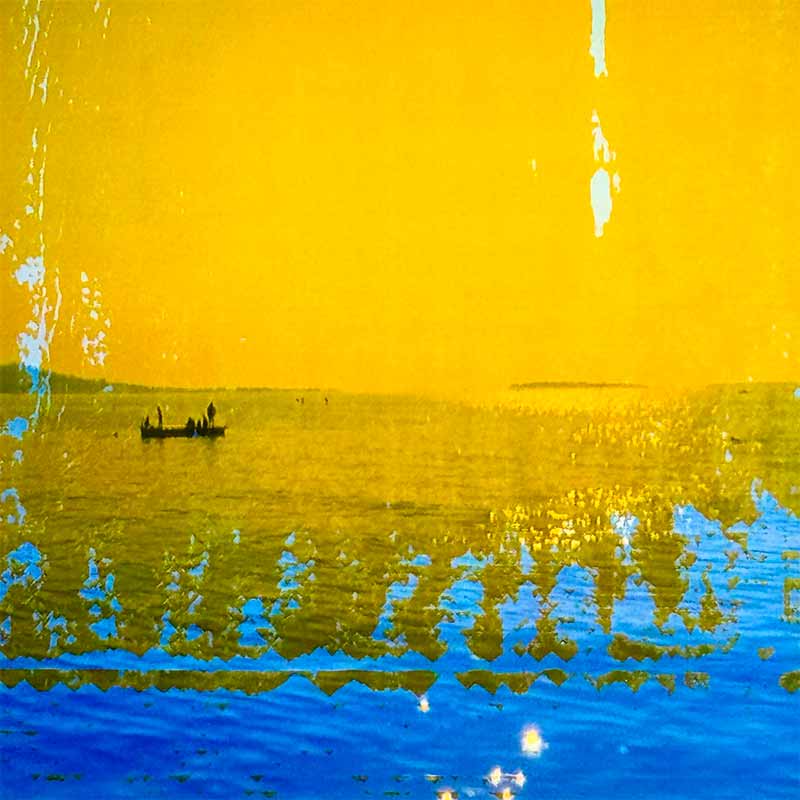
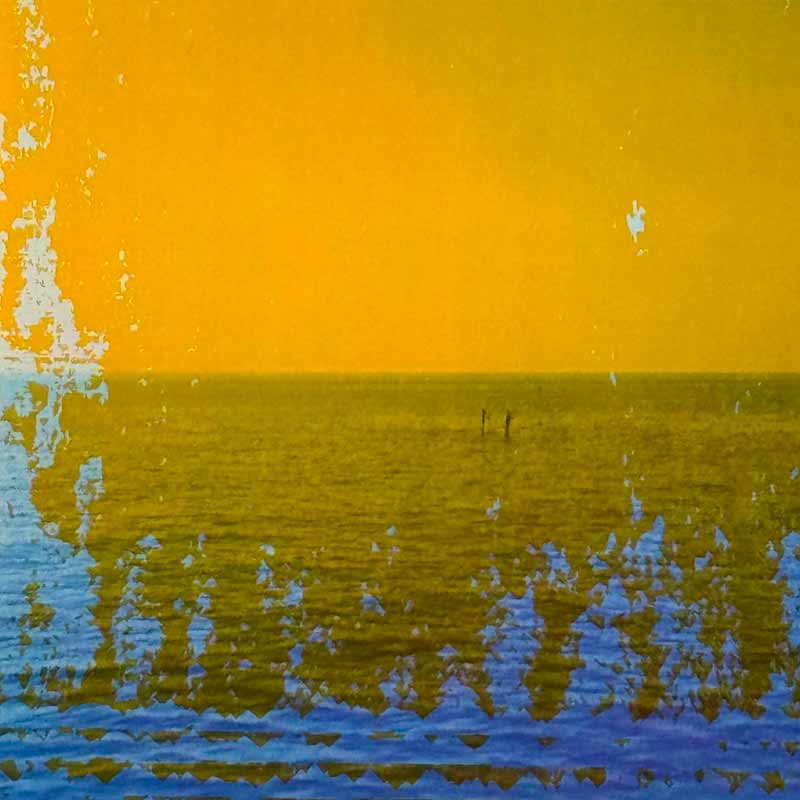
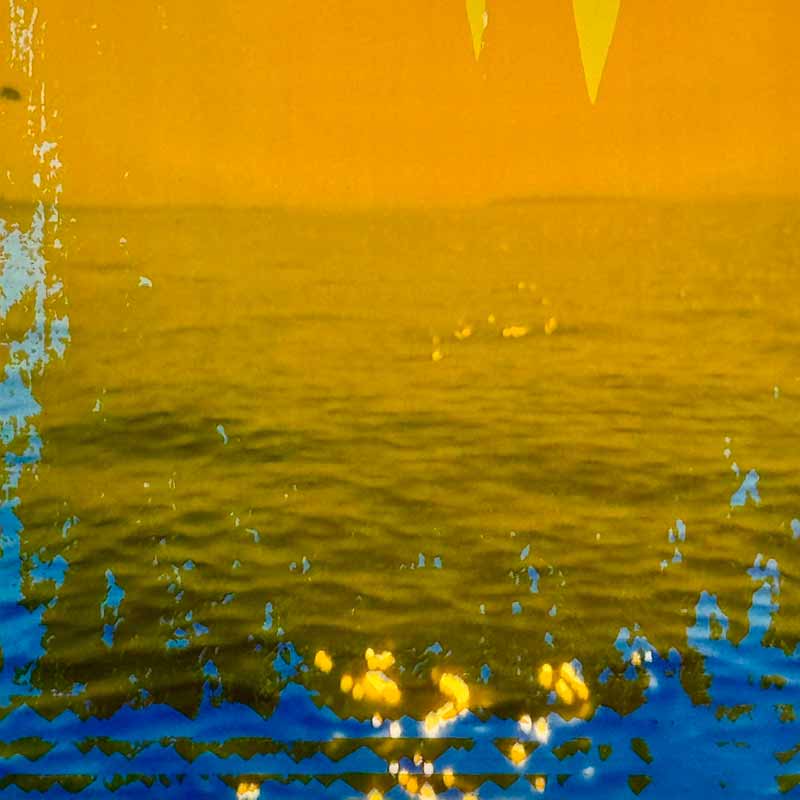
Background ‚world _ S E Q U E N C E S‘ (click to view/download)

Participants:
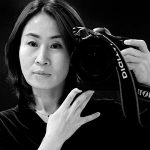
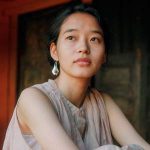
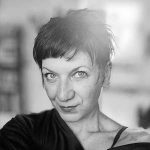
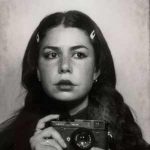
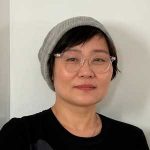
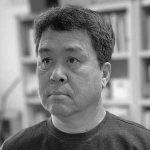
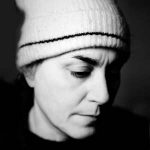
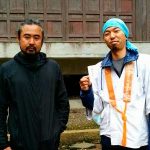
These are the current participants; future participating artists will be listed systematically in the order they join. Simply click on the photos to read about their projects and statements. 

AMI YOON
CHOI YOUNGKWI
CHOI SANGSIK
DONGWOOK LEE
MOO AAA
XIANGJIE PENG
ZIYI LE 樂子毅
JIA PENG
KYUNGHEE LEE
MINI TAMANG
VALENTINA LARI
MARINA MÓNACO
KIM MIRYEEON
SON YOUNGDEUK
SILVIA MINNI
FUTOYU / HOSHI
YANA KONONOVA
MONA CHARAF EDDINE
YING YUN CHEN
WUTTIN CHANSATABOOT
HENRIK STRÖMBERG
OMAR ROSALES
ZIXI XIA
SERENA PHUONG AN

Ami Yoon, Korea
Project: The Minimum Spring: A Dirge for the Child

THE MINIMUM SPRING: A DIRGE FOR THE CHILD

Ami Yoon is a fine-art photographer and educator based in South Korea. Her work investigates memory ,absence, protection, and violence through photography, video and installation. Her long-term project Stories of Loss includes major series such as Blossom (2005), A Certain Pose of Emotion (2007), FLOWOM (2008), At Night (2010–2012), Borrowed Stories (2013–2016), and The Minimum Spring (2017–2025) — works that poetically question how loss and care coexist within human relations.
Yoon earned her MFA in Photography from Hongik University (2015) and BFA from Kyungsung University (2009). Since 2016 she has been an Adjunct Professor at Kyungsung University, teaching Fine Art Photography and Contemporary Photo Workshop.
She also leads educational and curatorial programmes at GoEun Museum of Photography and Busan Museum of Contemporary Art. She founded DAMI Factory and serves as Director of the Korea Environmental Photography Research Institute.
Her solo exhibitions include The Minimum Spring — Portraits We Must Remember (Busan Cultural Foundation Support Exhibition, 2021), Borrowed Stories (Busan, 2016 / Seoul, 2014), and Invisible Stories (2018). Yoon has participated in numerous group shows such as Paris Photo 2021 (Christophe Guye Galerie, Paris), Young & Young Artist Project (Young Eun Museum of Contemporary Art, 2021), Busan International Photo Festival 2025, and Daegu Photo Biennale 2016.
Her works are held in the collections of Young Eun Museum of Contemporary Art (Korea), Christophe Guye Galerie (Switzerland), GoEunMuseum of Photography (Korea), and Dan Arendt Collection (Luxembourg). She has been awarded by the Seoul Foundation for Arts and Culture (2015) and Daegu Photo Biennale (2014).
Yoon regularly lectures on fine-art photography and visual theory across Korea and serves as jury member for public art committees.
Ami Yoon’s practice can be understood as a philosophical inquiry into memory and the unconscious — an experimental endeavour to redefine the private language of art as a social language. Through this process, she poses perceptual questions with a delicate gaze, revealing an ethical sensitivity attuned to the times. Her work thus becomes a way of living — a continuous act of perceiving and feeling the world’s moral temperature.
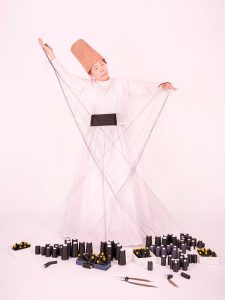
The Minimum Spring: A Dirge for the Child explores the unseen psycho­logical and physical violence that unfolds within the family—violence often concealed beneath the language of care. Building upon my long-term project Stories of Loss (2005–), the work examines how loss shapes our inner world not as a single event but as a structural condition of life. Through photography, staged scenes, and installation, I investigate how fragile states of fear, silence, and fragmented memory manifest within the body and space. The work reflects on child abuse cases in which protec­tion collapses into harm.

By transforming these incidents into symbolic visual forms, I seek to expose the hidden architectures of violence that permeate domestic life. Memory, understood as both personal history and collective responsibility, becomes a central axis: what begins as a private wound must eventually be brought into the realm of shared accountability. The work ultimately asks how we confront the violence that takes place where love is presumed to exist, and how we might reimagine protection beyond the boundaries of the family.

Choi Youngkwi, Korea
Project: Monologue 3

KARMA

Choi Youngkwi graduated from the Department of Photography and Video at Chung-Ang University and majored in photographic design at Hongik University’s Graduate School of Industrial Art. Seven years ago, the sudden loss of her husband plunged her into deep grief. To overcome this sense of loss, she began exploring the meaning of human existence and the profound themes of life and death, using her own body as a medium to visualize inner emotions.
She began her Monologue series in 2020, held her solo exhibition Monologue 2 at Space22 in 2022, and is planning Monologue 3 for 2025. She also participated in the two – person show Water Flows (2016) with Choi Kwang-ho, and the three-person show 3 Artists (2022) with Park Mi-jung and Lee Mi-kyung.
Her works have been shown in the Women’s Photography Festival: Brilliant Self-Portrait (2022), and in Who am I (2023) in Brussels, Belgium, which
explored the theme of self-portraiture. She participated in numerous group exhibitions both in Korea and abroad, including the 18th Jeonju International Photography Festival’s special exhibition Intanglement (2025). In2023, she was awarded Best Portfolio at the Dali International Photography Exhibition in China, and in 2024, she received the Best Portfolio Award at the Busan International Photography Festival.
She is currently an active member of the Korean Women Photographers’ Association.
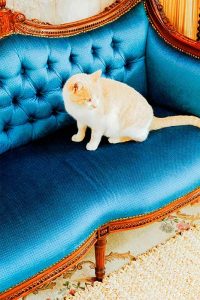
Days spent with someone who is always by my side, yet no longer present anywhere in this world.
Memories that never fade, never vanish — lingering like afterimages deep within my daily life.
At times, my trembling soul sets out to trace his spirit and footsteps. This work is a dialogue shared in the forest — and in the most intimate of spaces — with the remnants of him, who once loved hunting and, upon his final departure, left painful spikes embedded in my heart.
I draw and engrave the objects he cherished — his traces — onto transparent acrylic panels, or recreate them through 3D printing and glasswork, building an imagined space of fading memories. Through this, I breathe with him again, sensing his presence more vividly than in reality.
Here, the forest is not just a backdrop but a site of deterritorialized symbols, a space where meaning is reassembled.
Though there was pain, all that has passed — sending off our grown children into the world, meeting our grandchildren, shared meals in the hunting grounds — has become beautiful in memory.

As time passes, I am inevitably drawn deeper into contemplation of the self. I resonate deeply with Søren Kierkegaard’s view of humanity as essentially linked to divinity. With this comes a growing reverence for the Absolute.
I recall the whirling of the Sufi dancers, endlessly turning in place for 30 to 40 minutes — their yearning to approach the Absolute, to find spiritual communion.
I also remember the profound sense of awe I felt in the “Room of Meditation” at the National Museum of Korea, standing before the Pensive Bodhisattva, and the image of Father Kim Dae-geon at Myeongdong Cathedral…
With a desire to draw near to them, I used my own body as a means of expression.
Through these acts, I find consolation — and, perhaps, peace.

Choi Sangsik, Korea
Project: Connected World 21

CONNECTED WORLD

A Seoul–Daegu based photographer and exhibition curator with a background as a game developer and sound designer. He explores visual experience and the boundaries of reality, investigating personal and social issues through the lens of games and play.
Recently, he has also been working on projects that examine the connections between humans and the environment from a planetary perspective.
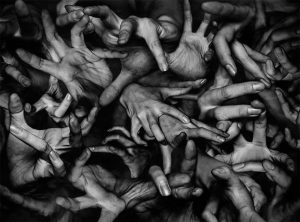
„Isn’t this world like a game that stops unless you keep inserting coins?“
As a child, wandering through arcades to escape the turmoil at home made me feel as if the world itself were one vast game. That experience was not merely an escape from reality but a moment that gave me a conscious perspective on how to observe and understand the world. This experience later deeply shaped my artistic identity and ultimately led to my current work.
The project begins from the idea that seeing is an act of intervention. Just as observation determines the state of a particle in quantum mechanics, the moment we look at something, it is fixed among endless possibilities. Vision is not simply a way to receive the world; it is an active force that enters and transforms it. Assuming that reality itself might be a vast simulation or a structure of data, I trace its gaps, errors, and fractures to capture images and create another world. At the same time, drawing
on my experience as a game developer alongside my perspective as an artist, I feel an inner drive to continuously explore and level up within new worlds, tracing the order and flow of the universe through the act of making.
When I lift the camera, I select a portion of the world. The chosen moment separates from all other possibilities and becomes fixed as a singular reality. This act of selection is visually experimented with in frames where reality and unreality, memory and the present, sensation and imagination overlap. Objects, removed from their original context, come alive at the boundary between reality and virtuality, creating multilayered perspectives and sensory passages. These visual experiments are not merely about arranging images; they are acts that expand the way I engage with the world. The world is not a fixed entity; every moment my perception reaches it, it reveals a new layer. Seeing is an ongoing act of creation, and this work records that process in images.
This work reveals that the moment of seeing is the very moment of connection with the world. Where my gaze reaches, the world reveals itself, and only then do I become a part of it. The resulting images depict a new world formed at the in the intersection of reality and virtuality, memory and data, experience and
perception.

Solo Exhibitions:

ARCADE — Gallery Newwave, Daegu (2025)
Documenting the younger generation playing games in the artificial lights and shimmering machines of modern arcades. The work captures contemporary people immersed in repeated play and stimulation, exploring the complex landscapes of contemporary cities and human experiences.

Connected World — 291 Photographs, Seoul (2025)
Based on childhood experiences and perspectives as a game developer, this work captures moments where reality and virtuality, memory and the present overlap. The act of seeing itself is explored as a way of connecting with the world, presenting a new dimension through layered imagery.

Mirage Game — Daegu Artway / Dalseo Art Center, Daegu (2020)
Exploring the boundaries between reality and illusion, truth and memory. Using installations (dioramas) with toys and objects in the desert, along with various visual experiments, the work captures moments where reality and fantasy intersect through imagery.

Selected Group Exhibitions

  • The Boundaries of Photography — Daedeok Cultural Center, Daegu (2025)
  • There Was a Fence in Front of Me — Lucida Gallery, Jinju (2025)
  • Ice Planet — Busan Gallery, Busan (2024)
  • Fuji Photo Festa: A Thousand Dreams — KOTE, Seoul (2023)

Awards & Selections

  • Selected for YIPF OpenCall, Yeoju International Photo Exhibition
    (2025)
  • Portfolio Selected, Busan International Photo Festival (2025)
  • Portfolio Selected, Daejeon International Photo Festival (2024)
  • Selected as Outstanding Artist, Photo-horizon Portfolio (2024)

Dongwook Lee, Korea
Project: Wozu

WOZU 16

Born in 1973 in Daejeon, South Korea, lives and works in Yangpyeong, South Korea. He graduated Hankuk University of Foreign Studies, with a major in Chinese. His commercial work includes clients Nike, Reebok, Calvin Klein, Samsung, LG, Levi’s, and fashion magazines Bazaar, GQ, Elle, Marie Claire, etc. As an exhibiting artist, his works have been shown in South Korea, Bulgaria, japan, Italia, England, Georgia, Ethiopia, Hungary, United States Of America. He was selected for the 2021 PHEST (International Festival Of Photography And Arts In Italy) Open Call.
He is the Grand Prize Winner of 2017 Lumiere Award in Los Angeles, CA, The Jury Award Winner of 2017 Hiii Photography in China, and the Grand prize Winner of 2007 HP (Hewlet-Packard) Turn-On Digital Award in Korea. His work is in the collection of Kiyosato Museum of Photographic Arts.
His work focus on inner state of human.
Sometimes his works looks like a painting, it started with his sister who was a painter. His art start from photography, he gradually expand his art through make a videos and sculpture.
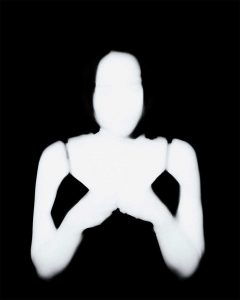
“Wozu” is a german word which means “what for”.
As in Plato’s allegory of the cave, all of us are constantly caught between fiction and reality, struggling among the thin boundary between pleasure and pain. “Wozu” is a series that show states of inner collision among fearful egos – individuals that want to look away from the truth, and who, despite the clamor of voices within and around them, remain largely silent.
In an endless circle of birth and death—born out of water and crossing water again to breathe their last—human beings have ceaselessly sought the reason for their existence, resisting both the world and self-made walls that block them. The water in this project represents the death of the physical body and, at the same time, the death of a soul driven to despair.
The peaceful but violent nature of water closely resembles the multi-layered nature of human beings, and I articulate the collisions between these egos through a primal fusion water and the human body.

In Norse mythology, humans are sometimes described as fruits that has fallen from the trees. Likewise, in the story of the Tower of Babel, the tower evokes a giant tree, suggesting both a human challenge to God and a desperate struggle to climb upward in search of one’s origin.
We, the defective human beings, drift through a chaotic world. The incessant questions derived from chaos may be the very reason for, or the meaning of, our existence.
“Wozu” originated in the bizarre and mystic image of myself reflected in the water.
These sentences were written just after I suddenly awoke from sleep, and they became the starting point of my work:
I saw a reflection of myself in the water, and there was a stranger.
I wish he would disappear tomorrow.

Solo Exhibitions:
  • 2024 Wozu, Blue Sky Gallery, Portland, USA
  • 2014 394041, Gallery Aile, Seoul, South Korea
  • 2014 Wozu, Gallery Palais De Seoul, Seoul, South

Group Exhibitions

  • 2024 Discovery-Daejeon International Photo Festival, Igong Gallery, Daejeon, South Korea
  • 2024 Omniscient appraisal point of view, Deagu Art Factory, Daegu, South Korea
  • 2023 Kolga Tbilisi Photo, Zurab Tsereteli Museum Of Modern Art, Tbilisi, Georg

Moo Aaa, Korea
Project: In the Darkness, toward the Shadow

NO TITLE

Does essence exist? If it does, I want to capture it.

Based in Seoul, the photographer Moo Aaa believes that if essence exists, it can be revealed not through a fixed, definitive approach but through an indeterminate one. Working with chance as a mediator, Moo Aaa seeks to capture phenomena in order to embody the essence of the subject, choosing a process that leans on the unconscious.

Through this, the artist explores inner thought and traces of existence that surface behind appearances. At the boundary between vanishing moments and remaining traces, between presence and absence, mooo.aaa quietly contemplates in images. Living within and closely connected to the subculture scene, the artist continues to develop a practice with a strong personal tone that moves back and forth between commercial work and art.

With the solo exhibition “무명 Ignorance (無明, Avidyā)”, Moo Aaa signaled the beginning of a personal narrative, and has participated three times in guerrilla-style exhibitions that merge party and exhibition at the techno club vurt in Hapjeong, Seoul. These exhibitions can only be viewed on the day of the event, and due to the rules of the space, photography inside is strictly limited, leaving only experiential memories to linger immaterially with the audience. Through this, Moo Aaa joined “vanta.project,” an experimental party project led by DJ and sound artist siot, and continues to expand the scope of artistic activity.
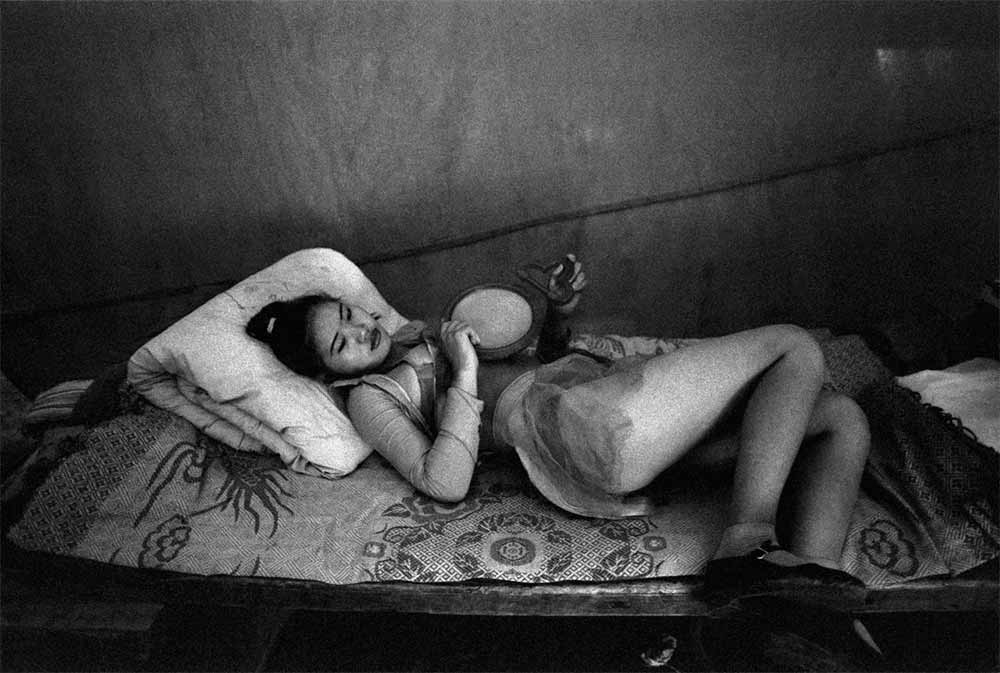
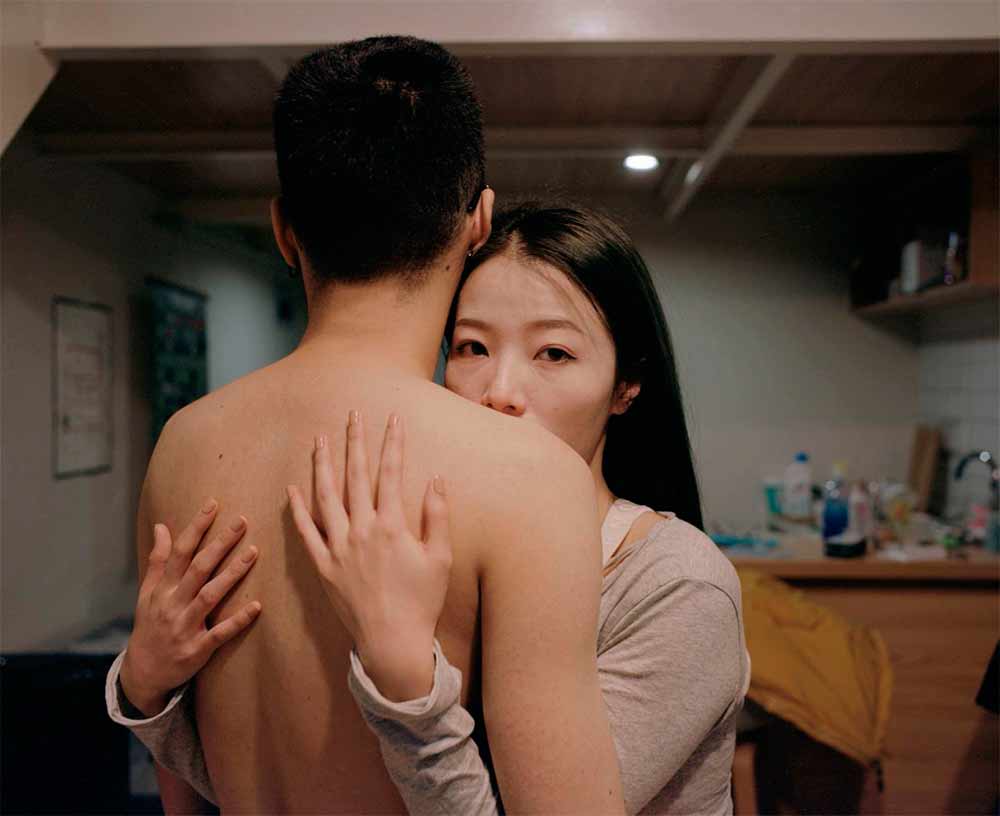
무아_Mua (romanized as mooo.aaa)

A Buddhist doctrine meaning that there is no fixed substance or eternal self called “I.”
It holds that all things arise from ever-changing causes and conditions, and that nothing exists as an independent, everlasting entity.
This work traces my journey, thrown into darkness, moving toward light and back toward the self. It is an inquiry into the essence of existence, giving form to the unconscious and filling the void left by the absence of fundamental meaning. At the same time, it is a medium through which I seek communion with the external world and with other beings beyond language.
“To explore the essence of existence is no different from exploring the essence of other beings and of the world.”
Cast from a world of light into darkness, I confronted realms society treats as taboo. Since childhood, my life has been marked by repression, rebellion, disintegration, and alienation. Whether by nature or under the influence of a deeply repressive Korean society, I resisted what felt oppressive. I rejected mainstream rules, gravitated toward subcultures, yet never felt a true sense of belonging. The lives others pursued felt like clothes that did not fit me.
When my parents divorced at eleven, my previously harmonious world collapsed. It was the first time my reality shattered beyond my control, a betrayal of what I believed in, and after that the value of belief itself dissolved.
I carried a secret I could share with no one. In early-2000s Korea, divorce was taboo and shameful. I swallowed emotions that threatened to overflow and continued to repress them. I became an outsider, unable to exist naturally within relationships.

My mother and I moved repeatedly within Seoul, driven by circumstances rather than choice. I attended three elementary, three middle, and three high schools. Before stability could form, environments and relationships dissolved again and again. Each shift pulled me further into marginalized communities, where darkness settled more deeply within me. Yet even there I felt alienated, fearing exclusion if I revealed my own comparatively small wounds.
I grew accustomed to living on the boundary, present yet observing from the edge. I resisted external oppression while unknowingly repressing my inner self. When outward rebellion reached its limit, that energy turned inward. Around 2017, severe depression overtook me. Everything halted except the effort to survive, weekly hospital visits and counseling were all I could manage.
I fled Korean society and lived in the UK for about a year. It was no paradise. The volatile weather deeply affected me, sunny days felt like heaven, rainy days like hell. The world remained the same, yet my inner state swung between extremes. This period reshaped how I perceive the external world, while depression transformed how I perceive myself.
I still take medication and continue counseling, but I have chosen to live. Through photography, which places me as an observer, I have finally thrown myself into my own life and into the world.
While writing this statement, my longtime friend and photographer Jeong Yejin (yenata) passed away. She had once exhibited in this very space. A radiant being, with so much light ahead, has become a single star. May there be peace.

Xiangjie Peng, China
Project: The Wandering Tent 1992-2002

Peng Xiangjie began practicing photography in 1990, focusing on documenting subcultures, non-mainstream communities, and conceptual photography. Has held roles including photographer at Document CHINA photo agency, academic and artistic advisor at Gucang Contemporary Image Gallery (Gucang Contemporary Art Institution), project coordinator for the Hou Dengke Documentary Photography Award, academic committee member of the Dali International Photography Festival, recommender for the Asian Pioneer Photographers Program (Dali International Photography Festival), and academic host for the Zhongnan Mountain Art Residency Project (Xi’an Original Image Gallery).

His works have been shown in:
  • Temple Gallery, New York, USA (Group Exhibition, 2024)
  • Magreen Gallery, Genoa, Italy (Solo Exhibition, 2023)
  • Merlino Galleria, Florence, Italy (Group Exhibition, 2003)
  • Temple Gallery, New York, USA (Group Exhibition, 2023)
  • CAM Casoria Contemporary Art Museum, Naples, Italy (Group Exhibition, 2022)
  • EKalokam Trust for Photography (ETP), India (Group Exhibition, 2020)
  • Damyang International Photo Festival, South Korea (Group Exhibition, 2020)
  • Paris Photo, Paris, France (Group Exhibition, 2019)
  • Vallette Gallery, Kuala Lumpur, Malaysia (Solo Exhibition, 2019-2020)
  • Drag Queens, HUNTart, Shanghai (Solo Exhibition, 2019)
  • Incheon Art Platform Gallery B, South Korea (Group Exhibition, 2019)
  • Delmar Gallery, Sydney, Australia (Solo Exhibition, 2018)
  • Doozo Galleria, Rome, Italy (Solo Exhibition, 2017)
  • ArteFiera Art Fair, Bologna, Italy (2017)
  • Two-Dimensional Realm, Pingyao International Photography Festival (Solo Exhibition, 2017)
  • In Arco Galleria, Turin, Italy (Four-Person Group Exhibition, 2016)
  • Artissima Art Fair, Turin, Italy (2016)
  • From Grain to Pixel: Photography in China, Monash Gallery of Art (MGA), Australia (Group Exhibition, 2015)
  • Chinese Photography: Since the 20th Century, Three Shadows Photography Art Centre, Beijing (Group Exhibition, 2015)
  • Touching Classics: Original Works of Chinese Contemporary Photography, Cipa Gallery, Beijing (Group Exhibition, 2015)
  • 1st Changjiang International Photography Biennale, Chongqing (Group Exhibition,2015)
  • Illusion & Reality: Reconstructing a Narrative, Xi’an Art Museum (Group Exhibition, 2015)
  • Face-to-Face, VHS-Photogalerie Stuttgart, Germany (Group Exhibition, 2014)
  • Outsider, Chengdu Image Art Center (Solo Exhibition, 2014)

Ziyi Le 樂子毅, China
Project: New Comer

Ziyi Le, born in 1993 in Fujian, China, is a photographer based in Hangzhou. He graduated from Minnan Institute of Technology with a degree in Fashion Design and later shifted his focus to long-term photographic projects. His work explores migration, boundaries, belonging, and the conditions of individuals in heterogeneous spaces. 

Le’s practice often employs visual storytelling to examine the psychological states of urban newcomers and marginalized individuals. Through environmental portraiture and spatial cues, he captures the ways in which people seek positioning and self-healing in unfamiliar environments. His major works, New Comer and The Other Shore, focus on the mobility of people and the ambiguity of space, reflecting the fluidity between reality and the inner world.

In 2023, Le received the Leica Oskar Barnack Newcomer Award. The following year, his photobook New Comer was published by Imageless. He has held solo exhibitions including New Comer at Place M, Tokyo (2024), and Changshou Well at Banshan Gallery, Tokyo (2019).

His work has been featured in exhibitions such as the Leica China Centennial Exhibition (2025), Wiesbadener Fototage (Germany, 2025), the solo exhibition New Comer at One Way Space (2025), the group exhibition When the Wind Blows Here at the 5th Changsha International Local Imaging Art Festival (2025), Re-illumination: Writing Through Photography (2024), Redefining Contemporary Portraiture (2024), the Leica Oskar Barnack Award Exhibition at Leica Gallery Taipei (2024), and Light and Shadow: Leica Oskar Barnack Award Exhibition at Three Shadows Photography Art Centre, Xiamen (2023).

He was selected for the Young Portfolio at the Kiyosato Museum of Photographic Arts, Japan (2022), and shortlisted for the Bar Tur Photography Award, UK (2021). In 2022, his work was also included in the Jimei x Arles International Photo Festival, China.

His work has been featured in media outlets such as kulturaustausch, Leica LFI, Radii, arttaca, Politiken, Vogue, and Jia Zazhi.


Jia Peng, China
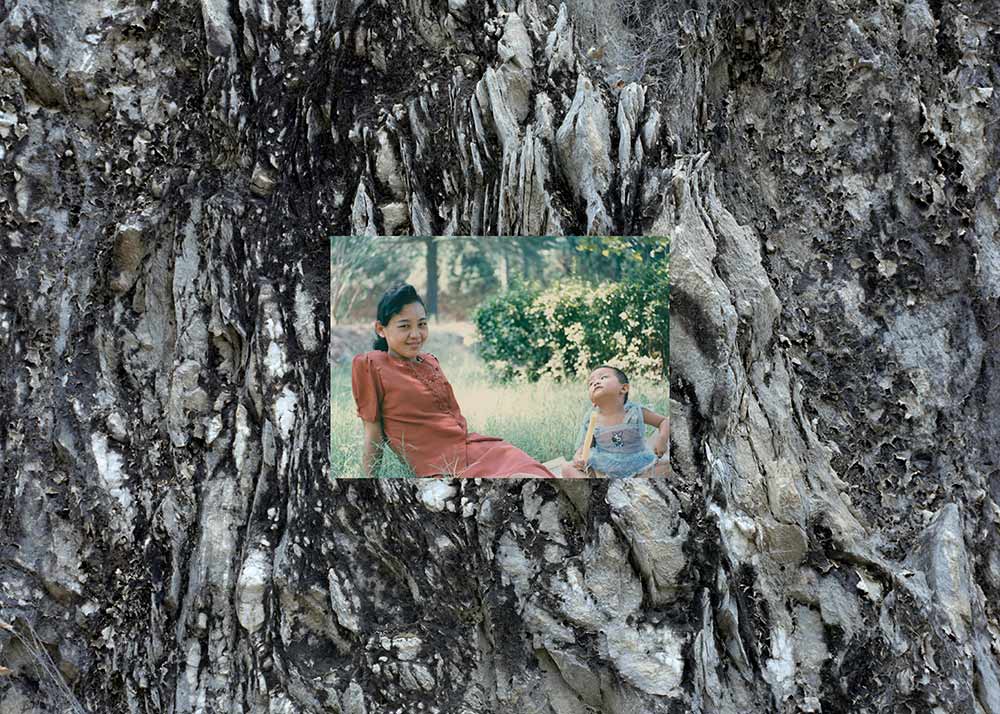
Project: mama

Peng Jia, born in 1989 in Xi’an, obtained an engineering degree in 2012 and began her photography practice in 2020. Her works have been selected for the Three Shadows Photography Award, the Singapore International Photography Awards, and the „Kunpeng Award“ at the PingYao International Photography Festival.

Peng Jia’s exhibitions have taken place in various venues, including Three Shadows Photography Art Centre in Beijing, Fuji X-Space in Shanghai, PingYao International Photography Festival in Shanxi, JinGangBei Art Center in Chongqing, Singapore, as well as at art book fairs in Beijing, Hong Kong,Chengdu, and Shanghai (abc).

At age 4, my parents divorced. My mother left with a strange man on his motorcycle. Since then, It has been hard to call out “Mom”; instead, I directly call her by her name—Li Aijun. Afterwards, I lived with my father and seldom saw her. The last time we met was in my senior year of college, when she was in the late stages of cancer. She passed away just two months later.

In 2017, I experienced persistent insomnia, leading to two years of psychological counseling. The main focus of the counseling was my relationship with my birth mother. It was during that time that I realized that she was an unavoidable presence, despite my attempts to distance myself.

In 2021, I began working on a project related to my mother. During this time, I organized her belongings, delved into her past, scanned numerous photos she left behind, and frequently visited her grave to take pictures. The resulting work combines old and newly taken photos with text, following the chronological order of my mother’s life.

Although titled “mama,” the project goes beyond the mother-daughter relationship. It also encompasses the story of my mother—a woman with limited educational background, who sacrificed a stable job for love and found herself repeatedly left behind by the times. She  lived through the era of family planning, the entrepreneurship boom, and the southward labor migration. She was once extravagant, poor, and ultimately passed away from cancer at the age of 47. She was a ‚consumable‘ of her time but also lived a vibrant and passionate life. The project also explores the emotional and cognitive changes I underwent while re-reading and reinterpreting her life, her, reflecting my evolving view of our mother-daughter relationship.

Everyone has their own mother, and mother-daughter relationships often share common themes of devotion and greatness. Through this project, I aim to provide a unique example: a life story of a woman who broke free from traditional female shackles and societal expectations to live for herself. While I abstain from passing judgment on my mother’s choices, I, as a woman, understand and share.

Kyunghee Lee, Korea
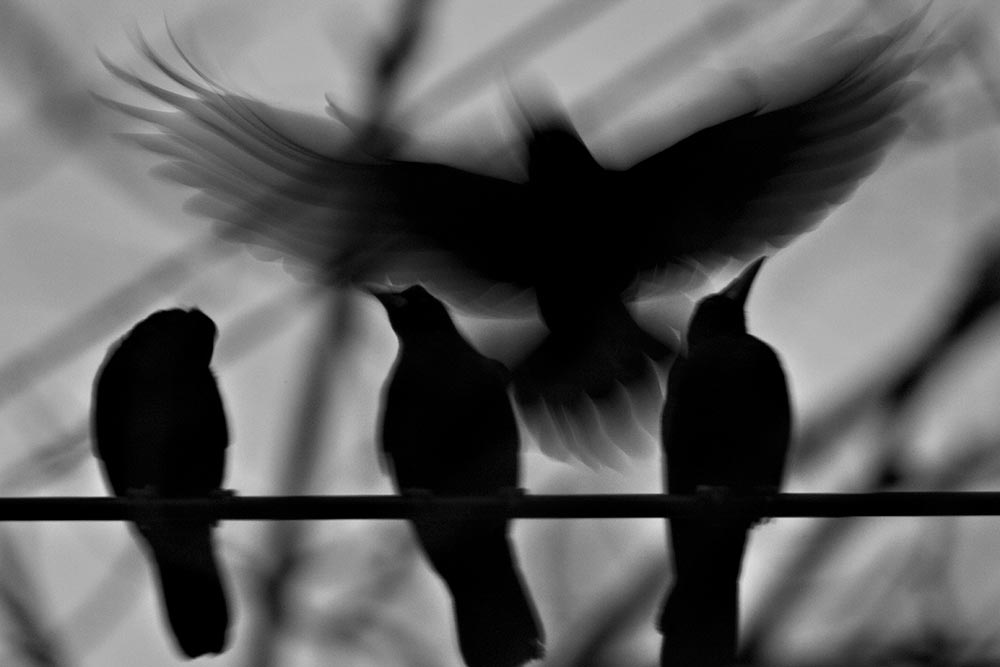
Project: Crows

KYUNGHEE LEE, from Busan, South Korea, holds BS in Pharmacy and PhD in Arts. Her work is regularly exhibited internationally, including Japan, Australia, China, and the US. Recently, <Des Oiseaux> featuring her work was shown at <Breda Photo, 2023>, Grote Kerk Breda, Netherlands, <BIPF 2023>, Busan, ROK, Rijeka, Croatia in 2024 and Centre photographique of Fontfreyde, Clermont-Ferrand, France in 2025,

Her publications include ‚island‘ (2008, Toseisha, Japan), ‘The Seventh Sense’ (2012, Toseisha, Japan), ‚Film Map‘ (2017, Noonbit, Korea). The most recently released ‘Des Oiseaux’ (2023, Atelier EXB, France) is part of Atelier EXB’s collection. Des Oiseaux is featuring her powerful black and white work on crows.

„Birds express themselves with „turn“, „long appoggiatura“ and „staccato“, which make them numerous souls.“*

When I walked alone at sunset, I would sing in a low, low voice. It is usually a line from a song or a mixture of this song and that song. But if you keep calling over and over again, strangely, you forget your fear in the dark. By rolling the transparent and round „ball of sound“ that the song makes, it goes through the darkness and moves forward.

A ball of repeated sounds, I open it and carefully go out. Or call someone. assimilated with darkness, I stand in a flock of scattered birds. Birds create an unidentifiable zone and the power of the earth is newly deployed. Constant in unknown strength it is a time when it has arrived too early or too late. Or it’s a time too early passed or too late.

I’ve been watching birds for years. I was afraid of dark roads and black forests every time, but I used to go out to meet birds again. Birds have my charmed consciousnesses that are not always caught. It can be any inherent rhythm or order in them. There are some connections between me and the birds.

* Marcel More, Ledieu Mozart et le mondes des oiseaux, Paris: Gallimard, 1971

Mini Tamang, Nepal
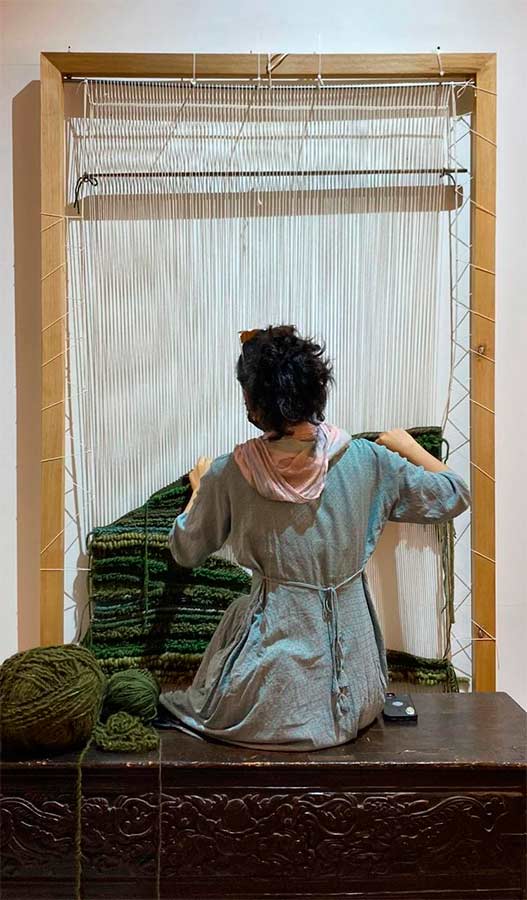
Project: The Story of Threads

Mini Tamang is an artist based in Kathmandu; born in Nepal and brought up in New Delhi. Her work intimately broaches the subject of memory: representing experiences, emotions, and relationships in physical form. Her chosen medium, yarn, is expressive enough for her deeply imaginative and personal process. Her unique aesthetic sensibility is informed by traditional uses of fabric and by the beauty of techniques. Tamang’s central motif–the five-strand braid– exemplifies this. Exhibitions
  • Nepal Art Council, Kathmandu — “Impressions” Date: June, 2022 Description: BFA Final Year Exhibition Project, Evocative Blue.
  • Wind Horse, Lalitpur — “An Ode to the Blue” Date: April, 2023 Description: An Ode to the Blue, presented five artists who reflected on the hybrid feelings of displacement and nostalgia encounter while traversing through their life. “Evocative Blue”
  • Kalashala Nepal, Lalitpur — “KURUS” Date: May, 2024 Description: KURUS featured 12 Crochet Artists, as crocheting intricately interlocks loops of yarns, thread or strands, the exhibition interlock diverse ideas and inspirations. “Your Green”
  • Siddhartha Art Gallery, Kathmandu — “Creative Health Nepal” Date: November, 2024 Description: The exhibition was an unique interdisciplinary event, part of UCL’s ACE Study (Alcohol Co-design and Community Engagement) on reducing alcohol harm through creative, community-driven approaches.
  • Stir Art Gallery, New DelhiDate: February, 2025 Description: Artist Commission, “Young Collectors Program (India Art Fair)” “Evocative Waves”

The black and white world with no color, for none held any significance until Green came to be to realize it had always been Blue within and without, The black and white shades, when nothing is significant, are the moments to treasure colors to fill them with memories that show diverse hues

So, with “Your Green”, unknowingly discovered yours truly had always been Blue. Blue that flowed from me to everything I adore; The shades layered themselves with memories and the lessons you taught, weaving knots one at a time, creating waves of Green Ocean which is now trying to find a shore leading to Red beach.

Valentina Lari, Italy
Project: Stella Maris

Born in Florence, Italy. Graduated with an MA in script writing and directing at Goldsmiths College, London, Valentina Lari lived in England until 2016. She’s currently living in Ghent, Belgium. Her visual work mainly focuses on sense of loss & death.  Analogue photographer and experimental filmmaker, she exhibits in both in Belgium and internationally.

Title: STELLA MARIS
Technical details: 35mm black and white photography
Year: 2024
Project Statement:

According to Oxford University Press and Dictionary, the definition of the Latin expression Stella Maris is as follows:

A female protector or guiding spirit at sea (a title sometimes given to the Virgin Mary) and means ‘Star of the Sea’

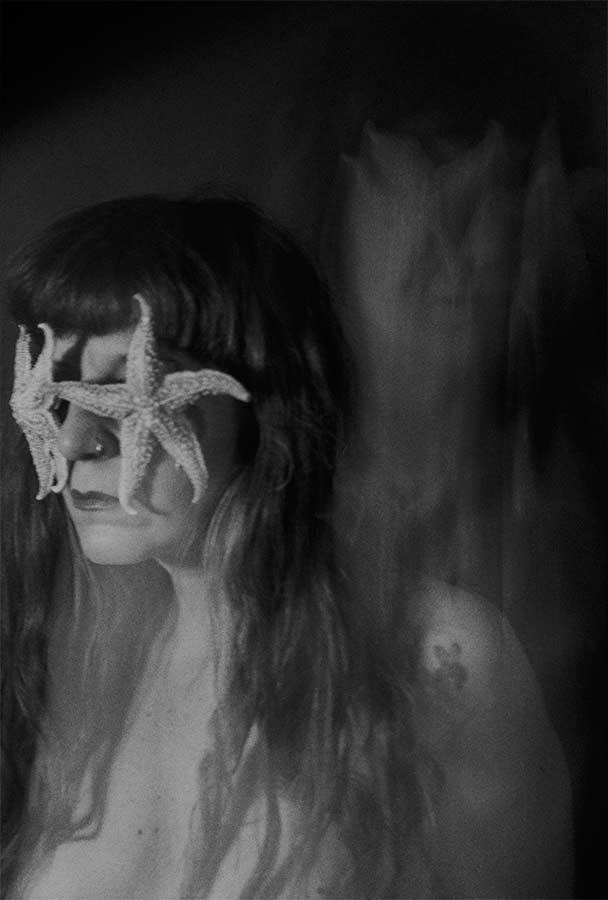
Stella Maris is a multiple exposure sequence of overimposed frames, created with a faulty 35mm Nikon camera. Through the years, I have created a series of analogue self-portrait that unravels as a filmic sequence.

I lived near the sea for several years and I am deeply connected to its energy. This works want to celebrate this connection but also to depicts an easiness towards my own identity. My choice of the title has a spiritual connotation but not necessarily a religiuos one. It’s about femininity and search of protection.

My work with self-portraiture is often characterised by a deformed view of my body – sometimes shapeless and multiplied, sometimes transformed into monstrous figures which are perceived more unsettling that scary.

I make art as a necessity – to stay sane, to stay human. It is a journey of discovery where I can confront myself with fears: fear of growing old, fear of death, fear of love, fear of changes. The visual transformation of body (and those of others) is a projection of my emotional and psychological turmoil. Yet, I am able to separate my daily balanced life from this Jungian shadow. If the someone has a good relationship with themselves and, consequently, with the outside world, their representation of their dark side will actually be a reflection, allowing them to see their hidden identity within it. For me, it is a process of recognition without perceiving a clear separation or censorship between the inner and outer worlds.

Marina Mónaco, Argentina
Project: Neue Welle (ongoing)

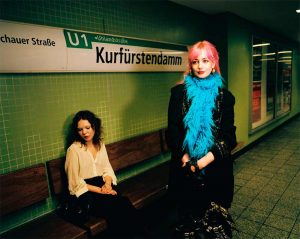
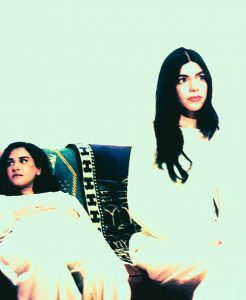
EMILIA AND OLGA AT U KURFÜRSTENDAMM

Marina Mónaco is a photographer and film director, now based in Berlin. Since moving to Germany in 2020, she has followed youth subcultures, young love, and the underground music scene, capturing fleeting moments that often go unnoticed.
About a year after settling in Berlin, she became drawn to the late ’70s and early ’80s New Wave movement, beginning her ongoing series „Neue Welle“ in 2023. Spending time backstage, in underground spaces, she slowly built trust within the scene, shaping a raw, high-contrast, black-and-white aesthetic.
Not speaking the language, she let that distance guide her vision, creating a nostalgic lens on a past she never lived. Her photography blurs past, present, and future, revealing intimate worlds rarely seen, inviting viewers into scenes where reality softens.
Marina has photographed in Germany, the Netherlands, New York, and London. Her work has appeared in solo exhibitions in Berlin and New York and as part of the European Month of Photography. She has joined group shows with C/O Berlin and participated in exhibitions at Les Rencontres d’Arles and the Museum of Warsaw. She has published two photobooks, including I Saw You in a Song: an AntiMemoir, presented at the 2024 New York Art Book Fair.
She sees her photography as a way to hold onto moments, people, and spaces that might otherwise vanish, glimpses of the nostalgia of the future.
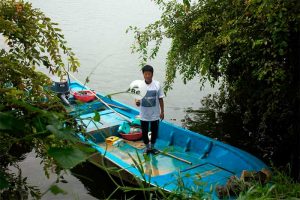
Project Statement: Neue Welle Series (2023–ongoing)
Neue Welle began almost by accident after I moved to Berlin. Films like Christiane F. and Wings of Desire, and the way the late ’70s–’80s New Wave scene was portrayed, shaped how I saw the city. Being new, not knowing the language, and feeling alone changed my work, making it darker, more documentary, entirely shot on film.
Youth subculture has always fascinated me. Growing up in Buenos Aires with little money but a strong sense of youth culture made me want to document it here from a different angle.
At first, I photographed as an outsider at concerts and backstage, the camera becoming my way to connect with people who didn’t speak my language. Over time, many became friends, young people between 19 and 25 figuring themselves out and somehow reflecting parts of me.
I photograph old clubs, rehearsal rooms, underground venues, bedrooms, and corners of the city that feel frozen or already fading. Some places are gone now. Some people take months to photograph. It’s also about knowing when not to shoot, how trust grows with those uncomfortable in front of a camera but comfortable with me.
Friends often say, “Nothing happens here.” And I think: „I think: everything happens.“. The beauty reveals itself in the photograph. When they see the images, they can’t believe they’re real, and sometimes neither can I.
Photography becomes a way to rewrite our present and hold onto what might be forgotten. I look for moments of connection in a screen-dominated world, capturing what might otherwise vanish. Even without a shared language, photography shows how everything is connected.

Seeing women photographers like Mary Ellen Mark, Helga Paris, Tish Murtha, and Susan Meiselas taught me what intimacy in photography can do and pushed me to create my own.
Analog photography now feels almost political, resisting fast, disposable images. Having something physical that lasts feels revolutionary.
Someone once told me I had access to a world they didn’t know existed. I’ll carry that forever.


About the Photo Selection from Neue Welle (2023–ongoing)
This selection features Berlin, New York City, London, Leipzig, Hamburg, Stuttgart, Düsseldorf, Cologne, and Dutch towns like Horst, Eindhoven, and Venlo, with plans to expand further.
I wanted to capture a wide range of moments, and the series has two sides, a more colorful medium-format, almost staged approach, and a raw 35mm black-and-white side documenting backstages and in-between moments on nights out. All subjects are real people wearing their own clothes, simply being themselves, often friends or strangers who later became friends.
The photos also show places that, whenever I walked by, made me feel a shift in time, toward the past or into a dreamlike mental space.

Kim Miryeon, Korea
Project: When the River becomes Memory (2015 – 2025)

© 2015. Concept & Production _ Local Post (Kim Seunghyun et al.), Performance _ Jo Mal-sul, Kim Miryeon, Photo & Video _ Kim Miryeon

′Beginning from the notion of an “unstable horizon,” this work presents the algae bloom in Korea’s Nakdong River—an outcome of the Four Rivers Project—as a global sequence. Like a trembling horizon, the river’s ecological “horizontal line” disappeared as its flow was blocked and the surface turned opaque with algae. This scene exposes the entanglement of climate change, political development, and ecological power. Through performance, interviews, and river-surface imagery, the work expands local memory and bodily experience into a globally resonant sequence.
The testimony of fisherman Jo Mal-sul, who has worked on the Nakdong River
for 35 years, reveals how ecological collapse directly destabilizes the foundations of life. Since the Four Rivers Project, his catch has fallen to roughly 20% of its former volume, and he can now launch his boat only half as often each week. His account offers a vivid record of how environmental change fractures local labor, time, and dignity.
This work visualizes the ecological trauma created by the interruption of flow, forming one fragment of the environmental crises unfolding simultaneously worldwide. Interweaving the collapsed horizon of the Nakdong River with the lived time of a fisherman, this sequence contributes to the global *Complete_Film_Work* as a shared memory of disappearing horizons.‘
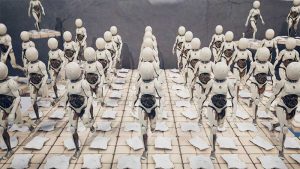
I explore the institutional and systemic issues in our society through my work. I use digital technology to expand the definition of site-specific art, focusing on collecting and documenting memories and traces of places that hold significance in everyday life and micro-history. I have been an active member of the multimedia art collective Local Post for over 10 years. Our work addresses regional issues through interdisciplinary artistic activities and temporary community projects, highlighting their relevance to contemporary life and universal themes. My art practice has been recognized in Korea and abroad. I have participated in numerous exhibitions, such as:
  • The Cartesian Corridor at Kunstraum Innsbruck in Innsbruck, Austria (2005)
  • Kunstfilmtag at Malkasten in Düsseldorf, Germany (2007)
  • Photo Korea 2009: Shooting Images at COEX Jangbogo Hall in Seoul, Korea (2009)
  • D Artist at Daegu Museum of Art in Daegu, Korea (2012)
  • moving scape, a special invitation exhibition at Smile Art Center in Daegu (2014)
  • Mushin at SOMA Museum of Art in Seoul, Korea (2015)
  • A major solo exhibition curated by project space SARUBIA in Seoul (2016)
  • Return, Raum für Raum in Düsseldorf, Germany (2019)
  • My experimental documentary film **The Art of Moving** was selected for the 23rd Daegu Short Film Festival “Padong” (2022).

I have received several accolades, including:

  • German Lawyers Association Award and Archive Artist of SOMA Museum of Art, Drawing Center (2008)
  • Today’s Young Artist Award, Daegu Cultural Arts Center (2009)
  • Ha Jeong-ung Young Artist Award, Gwangju Museum of Art (2012)
  • Gyeongnam Maecenat Support Artist (2016)

My recent multi-media work Shadow of Fog was part of the “Time walking on memory” exhibition at Oil Tank Culture Park T5, Seoul (2023) and won the Grand Prize in the VR category at the Mannheim Arts and Film Festival.

Recent Exhibitions: 2025
  • ′The Drawing: Personal Definition’, Seoul Olympic Museum of Arts, Seoul (G)
  • ′May Art Festival: Democracy as a Living Thing 2025′, Eunam Art Museum of Art, Gwangju (G)
  • ′Solidarity of Light and Breath‘, Jeju Museum of Art, Jeju (G)
  • ′Networking the City: From Stillness to Strolling‘, RICA, amoo’s room, daehwa.scene, Daegu (G)
  • ′Do_dat code in Nort Art‘, Schloss Mitsuko (G)
2024
  • ′In/visible Work_er‘ (LOCAL POST & Friends), Optical Hitech Gumi factory, Sochon Art Factory in Gwangju, Labor History Museum in Ulsan (G)
  • ′Hemmungen sind die falsche Form des Widerstands‘, Schloss Museum Biesdorf, Berlin (G)
  • ′Consecration: Becoming the Light of Dalgubeol‘ 2024 Yeongnam Jaeil Media-Facade, Daegu, Korea (G)
  • ′Gwangju Biennale ‚Shichunyeomin ((侍天與民))“, Gwangju Museum of Art, Gwangju, Korea (G)
  • ′REBOOT – WEAVE A STORY FROM DOT TO DOT 1′ MAY ART FESTIVAL, Eunam Art Museum, Gwangju, Korea (G)
  • ′Knit together Project‘, Se Un Art Space, Seoul, Korea (S)
2023
  • ′Signals and Body‘, Solgeo Art Museum, Korea (G)
  • ′Shadow of Fog II‘, Bongsan Culture Center, Space 4, Daegu, Korea (S)
  • ′Sphere Salon‘, Galeria Cenzontle, Mexico City, Mexico (G)
2022
  • ′Time walking on memory‘, Oil Tank Culture Park T5, Seoul, Korea (G)
  • ′nomansland.academy 1. Alternative Artspace IPO‘, Seoul, Raum fuer Raum, Düsseldorf, Germany (G)
  • ′TOGETHER / A LESSON WITH PENCK!‘, Colener Zimmer, Düsseldorf, Germany (G)
2021
  • ′The ambivalence is now getting a new direction‘, Gallery Lachenmann Art, Frankfurt, Germany (G)
  • August Issue / ′Flickering Homes‘, Insa Art Space, Seoul, Korea (G) 2020
  • ′New Communion‘, Relay Drawing, Daegu Art Museum, Daegu, Korea (G)

Son Youngdeuk, Korea
Project: The Room of Others

Based in Daegu, South Korea, Son Youngdeuk is an Animation Director and Media Artist currently serving as a professor at Keimyung College University. He explores the existential anxiety of modern individuals and social structures by combining the temporality of animation with media technology. Grounded in a painterly sensibility, he aesthetically interprets the principles of animation—where static images gather to create the illusion of movement—as a metaphor for the way human life accumulates.
The core theme permeating his artistic world is ‚Unstable Equilibrium.‘ The artist uses the ‚unicycle’—which requires constant pedaling on a single wheel to avoid falling—as a metaphor for the precarious lives of modern people. This instability, where stopping implies being left behind, is interpreted not merely as pessimism, but as a fierce and paradoxical ‚rhythm of survival‘ that sustains life.
He views the city we inhabit as a massive jungle or a closed space where communication is severed. Within this setting, individuals are depicted as ‚insects‘ with hard shells endlessly competing to reach higher ground, or as ‚Zipper Man,‘ a character with a tightly closed mouth, isolated in silence. Through this allegorical visual language, the artist sharply captures the inner alienation of individuals living within the affluent city.
Recently, his artistic gaze has deepened into the layers of ‚time and memory‘ through new media technologies such as Virtual Reality (VR). He creates scenes where time flows very slowly, contrasting with the fast pace of the world, or restores memories of disappearing places within digital spaces. This is an artistic attempt not simply to provide new visual spectacles through technology, but to make us sense once again the weight of time and the precious memories we have forgotten.
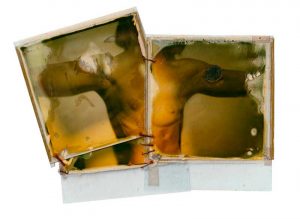
Project : The Room of Others

This project is a visual essay on the solitude of individuals floating within the vast space of the city and the invisible boundaries that separate them.

Although countless others exist just beyond a single wall, we live in an era of disconnection where we cannot enter each other’s worlds. Through the gaze of an existence hovering outside this ‚Room of Others,‘ I aim to capture the psychological distance that seems close yet remains unreachable, and the empty air flowing in between.

My animation sequence does not tell a specific narrative; instead, it embodies the rhythm of existence like a ‘Staccato’ flickering in the cracks of light and darkness emitted by the city. It may be the faint light of others leaking through a door crack, or my own hesitation hovering before a closed door.

This work metaphorically depicts the landscape of alienation existing within us, transcending physical space. Through this, I question the temperature of relationships we have lost in the cold digital age, and with what gestures we are living to fill the disconnected gaps.


Selected Group Exhibitions & Projects

2025

  • Solidarity of Light and Breath, Jeju Museum of Art, Jeju, Korea

2024

  • Yeongnam First Gate Media Facade: Consecration, Yeongnam First Gate, Daegu, Korea

2023

  • undress me my little BUDDHA, Alternative Space IPO, Seoul, Korea
  • Everything That Moves, Eoul Art Center, Daegu, Korea
  • Signals and Body (Solgeo Art Museum Special Exhibition), Solgeo Art Museum, Gyeongju, Korea
  • Numerous Holes and Ghosts Engraved in Cobalt Blue (Online Media Project), Art Space Bomulseom (Sponsored by ARKO), Korea
  • Time for a Chisel to Pass through a Rock (VR/Interactive Installation), Eoul Art Center, Daegu, Korea
2022
  • Play Ar T Life, Daedeok Cultural Center, Daegu, Korea
  • nomansland.academy 2: Raum für Kunst, Düsseldorf, Germany
  • nomansland.academy 1: Land without People, People without Land, Alternative Art Space IPO, Seoul, Korea
  • Time Walking on Memory, Oil Tank Culture Park T5, Seoul, Korea
  • Skin of Time (Suseong Art Odyssey), Suseong Artpia, Daegu, Korea
SCREENINGS & FILM FESTIVALS  
  • 2023 Seoul Indie-Animafest (Panorama Section), Yeonnam CGV, Seoul, Korea
  • 2023 Daegu Short Film Festival (Invited Screening), Daegu, Korea
  • 2019 Seoul Indie-Animafest (Independent Walk Section), Lotte Cinema Myeongdong, Seoul, Korea
  • 2019 Daegu Short Film Festival (Invited Screening), Oheo Theater, Daegu, Korea

Silvia Minni, Italy
Project: Transition zone

This series of manipulated Polaroids explores the body as a fragmentary, unstable space traversed by multiple identities. Working exclusively with Polaroid, a medium both fragile and unpredictable, I question how the photographed body is formed, dismantled, and recomposed through the gestures of the image.

The manipulations, pressing, altering, deforming the surface, are not merely formal. They become a way of relating to the body, revealing areas of resistance, flaws and echoes. The bodies appear not as wholes, but as fragments: skin, folds, surfaces, tensions. This fragmentation does not anonymise, it displaces, opening identities that remain only partially visible.

The fragment becomes a method, allowing the body to be approached not as a stable unit, but as a constellation of clues. Each Polaroid negotiates appearance and erasure, exposure and withdrawal. The body never gives itself entirely, and in this restraint, in this opacity, another form of presence emerges, intimate and undisciplined.

The Polaroid, instantaneous and irreversible, functions as a field of tension where photographic and bodily matter meet. By manipulating the image, I also shift the perception of the body: contours move, boundaries crack, surfaces thicken. The body becomes living matter, embracing transformation as a condition of existence.

Identity here is not meaning assigned, but plurality revealed in breaks, gaps and distortions. It manifests as force rather than form. The image ceases to be a mirror, it becomes a space of friction where bodies escape definition.

In exhibition, the series offers an encounter with bodies that never reveal themselves directly, appearing instead through touches, fragments, intensities. The manipulated Polaroid testifies to the undefined: identity emerges as movement, a matter in constant transformation.

This series makes perceptible a body that is never fixed, traversed by multiple temporalities, fragmenting to reinvent itself, a body that cannot be captured, yet persists in the tension between what appears and what escapes.
Silvia Minni is an Italian photographer, born in Germany and now living and working in Paris, France. She studied photography at the Istituto Europeo di Design in Rome. The body and human conditions become her subject, object, support, measure and material, which she questions, sublimates or derides, opening up a reflection on political, social, cultural and metaphysical issues.

EXPOSITIONS (Selection) 2025
  • Incheon International Contemporary Photography Exhibition
  • NordArt – International Art Exhibition, Germany
  • SPHERE – Salón Internacional de Arte Contemporáneo, Mexico City
2024
  • Undress Me My Little Buddha, Global Art Project, 60ADADA, France, organisation et commissariat
  • Undress Me My Little Buddha, Global Art Project, Schloss Mitsuko, Germany, organisation et commissariat
  • SPHERE – Salón Internacional de Arte Contemporáneo, Mexico
2023
  • Métamorphose, project exchange South Korea, organisation et commissariat, 60ADADA, Saint-Denis
2022
  • 90%10, l’invisibilisation des femmes dans le monde de l’art, organisation et commissariat
  • In Continuum, 60ADADA, Saint-Denis
2020
  • [BOP ART] The Time of Changes: Reimagining Art, Labour and Bop, Alternative Art Space Ipo, Seoul, South Korea
2019
  • Capteur temporel, 60ADADA, Saint-Denis, France
  • Chairs en mouvements, 60ADADA, Saint-Denis, France

Satoshi Hoshi / Masaharu Futoyu, Japan
同行三人 Dogyo 3nin
Project: Tokyo Story

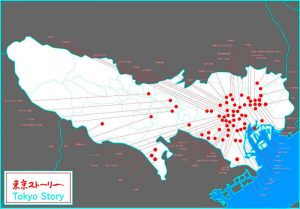
This project was created in 2015 by painter Hoshi and artist Futoyu. This was carried out in the following year. Based on the pilgrimage, Hoshi walks all the way and draws pictures of the 88 temples, and Futoyu accompanies him, recording the Hoshi’s situation and creating documentary video.

Ten years have passed since I left Japan.
For someone who lives in Berlin and only occasionaly visits Tokyo, the speed in which the city transforms itself appears incredibly fast, even compared to other major cities.
And this transition wil only accelerate as Tokyo hosts the 2020 Olympics. The destruction of the old and the creation of the new are two sides of the same coin, and so are their merits and demerits. National Stadium wil be renewed, and there wil also be various changes in scenery on a smaler, more personal scale. I would like to hear from people across al ages, genders, and nationalities about the places in Tokyo that they feel most attached to, visit the actual location myself and draw its current scenery (though, the scene they remember may not exist anymore). There is no guarantee that the scenery we see in front of us or things that we experience wil stay forever unchanged. Memories of the bygone scenery precipitates and create multitude of invisible layers. The stratum of memories exists silently on the megacity of Tokyo. For a brief moment of time, I would like to bring the fragments of memory to light. I would like to exhibit the sceneries with the related episodes to imagine the scenery that holds so dear to someone.
It is not only heroes that make history.
By drawing various sceneries of Tokyo from multiple levels and layers, this project aims to demonstrate the obvious overlooked fact that an unexceptional place for someone is the exceptional place for another, and further, to indicate the rich diversity of memories Tokyo embraces.
Yana Kononova, Ukraine
Project: Boar Gardening

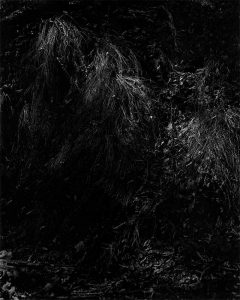
BOAR GARDENING #1614

Yana Kononova is a Ukrainian artist working with camera-based material practices, writing, and expanded print techniques. Her work approaches landscape as a form of historical articulation and a sensitive terrain within ecocritical and speculative frameworks. She explores the tactile qualities of the photographic image, navigating the threshold between material process and visual representation.
She holds a PhD in Sociology and a diploma in Art & Curatorial Practice from the New Center for Research & Practice. Kononova is the recipient of the Bird in Flight Prize for Emerging Photography (2019) and the Hariban Award presented by Benrido (2022), and was nominated by FOTODOK to the FUTURES talent network (2023). Her work has been supported by grants and fellowships from the Andy Warhol Foundation for the Visual Arts (2023), the Institut für die Wissenschaften vom Menschen (IWM, 2024), and Faktura10 — a key initiative of Ribbon International (2025). Her work has been widely exhibited in Ukraine and internationally.
Project: Boar Gardening
2024 — ongoing
Series of black & white photographs

Boar Gardening unfolds within the Kaniv dislocations in Ukraine—Europe’s deepest ravines, shaped by glacial thrust and postwar reforestation. Once bare and inhabited, these terrains were transformed by acacia plantations intended to stabilize the land, now overtaken by wild growth and geological unrest.

In this layered and shifting landscape, wild boars cultivate their own subterranean pathways, inhabiting a terrain that is both post-human and post-political. Set against the backdrop of war and climate crisis, the series traces how nonhuman agents—boars, clay, acacia—reshape the earth in a choreography of collapse, adaptation, and quiet insurgency.

Mona Charaf Eddine, Germany
Project: Something, Shared

SOMETHING, SHARED

Mona Charaf Eddine is a German-born artist of Lebanese descent whose work explores identity, belonging, and the emotional distances between people. 
As the first academic in her immigrant family and a fellow of the Studienstiftung des deutschen Volkes, she draws on personal experience to reflect on broader social dynamics.
Mona studied Fine Arts under the supervision of Julika Rudelius, specialising in film and photography. During her studies, she participated in numerous exhibitions, including Hochkant Filmfest in Bremen, EMAF in Osnabrück, and later in international showcases such as the Breeze Art Fair in Seoul and Incheon International Contemporary Photography Exhibition. 
Her artistic practice is rooted in themes of identity, vulnerability, and the unspoken emotions that shape our daily lives. Through intimate, often moments that would go unnoticed, she invites viewers to engage with the subtle complexities of human connection. She is dedicated to creating inclusive and accessible spaces where art becomes a platform for dialogue and community.
With a background in film, Mona writes her own scripts and continues to explore storytelling across different mediums. Her first essay, reflecting on her experience living and working as an artist in Berlin, was recently published by Breeze Art Fair. She is also selected as one of eleven nominees for the upcoming 49th Bremer Förderpreis für Bildende Kunst.
Project: Something, Shared

Probably life will unfold either way, right? All the things I encounter, all the people I meet carry something within them, and I start to miss it when they leave.

But I do not have to miss it if I try to recall it and make it a habit of mine. Or even if I recreate the situation as a visual image or a script. In that way, I can make it never ending. Memories can live on like that.

This is at least what I think. I simply like to remember things very vividly. I try to create a reality apart from where I stand right now, mixing what truly happened with what could have been. The people are real, the feeling of them, their identity, a dream or a nightmare, but usually it stays hidden somewhere.

To make this layer more tangible for people who feel close to my identity, I began working with my impression of how each generation of youth keeps changing while carrying the same need for belonging and the same quiet yearning. I can only observe the youth I am part of. Taking photographs is not a search for a perfect moment. I learned that a moment gains depth when it is allowed to exist as it is, without being unnaturally shaped. In those situations, the camera becomes a kind of court reporter, simply recording what unfolds.

Perhaps I am trying to unfold it through my perception of life and make this as real as it can get.

Ying Yun Chen, Taiwan
Project: Dance as the shell of a time series- Time in shape (Yuguang Island)

Dancer, Performer, multimedia Artist, originally from Taiwan, has a diverse background in Chinese opera, kung-fu, ballet, contemporary dance, and improvisation. After graduating from the Taiwan National University of the Arts, she pursued further dance education in Germany at Folkwang University of the Arts.

During her studies, Ying performed in various choreographies and developed her own works, receiving recognition and awards at dance festivals. She joined Folkwang Tanz Studio (FTS) and expanded her experience by collaborating with different artists and dance companies.

Ying has toured internationally, performing in countries such as Myanmar, Thailand, Philippines, and Malaysia. She has also worked on productions supported by renowned institutions like Pina Bausch Fellowship and Goethe-Institut.
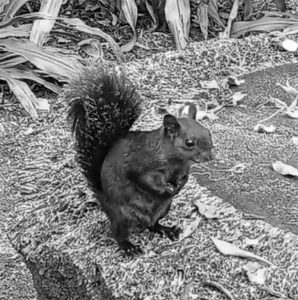
Project: Dance as the shell of a time series- Time in shape (Yuguang Island)

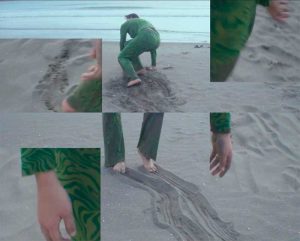
Dance as the Shell of Time is an ongoing series that explores how time becomes perceptible through the body.

The project focuses on traces formed through the contact between the body and sand, shaped over time by water and flow. Through movement and sustained physical contact with the ground, the body functions both as an active agent and as a material surface. Is it accumulation? or erosion?

Wuttin Chansataboot, Thailand
Project: Pareidolic Narrative [Excerpt]

Wuttin Chansataboot is a Thai media artist whose practice navigates the confluence of art, science, and philosophy. With a background that spans experimental film, multi-media installation, and digital systems, his work probes the unstable terrain between human perception and technological mediation. As both practitioner and researcher, Chansataboot approaches artistic creation as a mode of inquiry—one that seeks not only to express but to unravel, to question, and to reconfigure the structures through which meaning and subjec­tivity are formed. At the heart of his practice lies a deep engagement with the concept of language in its most expansive sense. For Chansataboot, language is not limited to verbal or textual communication, but emerges as a broad field of symbolic systems, spanning from programming syntax and DNA sequences to algorithmic behavior and machine perception. These lexicons, he suggests, constitute the shared protocols of exchange between the human and the non-human, the organic and the artificial, the seen and the computationally inferred. His work often unfolds through the interplay of data, motion, and time, drawing on tools such as moving image, coding, telecommunication technologies and artificial intelli­gence to render what is otherwise intangible. These mediums serve not simply as instru­ments, but as conceptual agents, allowing him to explore how fluid, impermanent datasets can be transfigured into aesthetic experiences. What emerges are poetic systems of transformation, installations that translate microbial DNA into sound or motion, generative visuals that disrupt and recompose digital identities, or algorithmic interventions that mirror the mutability of contemporary existence. Chansataboot’s artistic investigations are as much about perception as they are about presence. His works do not offer closure, but rather dwell in states of ambiguity and emergence, calling attention to the instability of form, the fragility of meaning, and the constant negotiation between subject and system. In this way, his art opens a space where the symbolic and the material, the logical and the lyrical, converge in new and evocative constellations. For more information about the artist, please visit: https://wuttinchansataboot.com
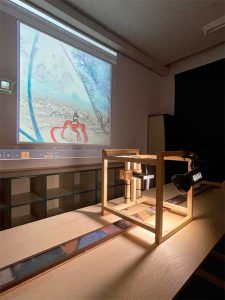
Pareidolic Narrative is a mixed-media installation originally developed for Nakanojo Biennale 2025. The project brings together kinetic photographic works with real-time AI-generated moving images and sound, reflecting on how the subtle rhythms of everyday life and accumulated traces of place can gently awaken memory and imagination.

The term “pareidolic” derives from pareidolia, a psychological phenomenon in which vague or ambiguous visual stimuli are perceived as meaningful forms. This concept plays a central role in the project and is closely connected to the AI denoising process, through which noise patterns are gradually interpreted and transformed into recognizable images. In this sense, pareidolia functions as both a conceptual and methodological framework for the work.

The project began with a period of walking and observing throughout Nakanojo. During this stage, I photographed what I refer to as the “surface of Nakanojo”, textures of roads, facades of abandoned houses, and everyday objects along the streets, surfaces that have long absorbed the experiences and memories of those who live, and once lived, there.

These images were then digitally processed into blurred and ambiguous forms, horizontally stitched and printed as three photographic strips, each measuring 8.5 meters in length. I refer to these as “AV Stripes,” (A = Audio, V = Video) as they function as both visual and sonic sources within the installation. The prints were rolled into a custommade device, forming a continuous photographic scroll.

The scroll was subsequently brought to various locations in Nakanojo and shared with local participants who kindly took part in the project. Responding to each ambiguous image as visual stimuli, participants were invited to draw whatever forms they perceived, accompanied by a short written description of their interpretation.

In the next stage, patterns of holes were carefully punched into each drawing, with their placement determined by the drawn lines. This process inverts the familiar act of imagining figures by connecting stars in the night sky, here, the drawing itself defines where the “stars” (holes) should appear. Within the exhibition space, each completed stripe was installed into a table-like structure incorporating a music box and a web camera. Once looped through the music box mechanism, the punched holes generated distinct melodies. At the same time, the moving stripes were captured by the cameras and transmitted to a computer, where three video streams were combined and interpreted by an AI system in real time, producing continuously evolving moving images.

For the ‘world_SEQUENCES’ art project, “Pareidolic Narrative” is presented as “Pareidolic Narrative [Excerpt]”, featuring selected visual materials excerpted from the original installation. In this adapted format, the work offers a partial yet concentrated glimpse into the broader project, foregrounding its visual language while maintaining its underlying conceptual concerns.

This project would not have been possible without the generous support of the people of Nakanojo and the biennale team. I am especially grateful to Suzuka Kishimoto, whose support was invaluable throughout the development and realization of the work.

Henrik Strömberg, Sweden
Project: Final Curtain Call

Henrik Strömberg, lives and works in Berlin. He holds an M.A. in Photography and History of Photography from FAMU, Academy of Performing Arts Prague, Czech Republic and a BA in Fine Art from Camberwell College of Art, London, UK. Strömberg works with photography, sculpture and installation, often mer­ging the various media in overarching spatial installations developed around topics such as transformation, otherness and societal paradigms while compri­sing the interaction between sculptural volumes, architectural vocabulary and the use or digital reproduction of object trouvée and repurposed materials. Strömberg – consecutively – exhibited mostly institutionally in Sweden, U.K., Czech Republic, Germany, Italy, Poland, France, Switzerland, the Netherlands, Austria, Belgium, Scotland, Japan, USA, South Korea and Martinique.  

Project: Final Curtain Call

A video loop piece of an, in the street, abandoned puppet theatre. I documented, filmed the miniature curtains of the puppet theatre blowing in the wind as I found it. The sound is also live from the moment of the documentation;

Using in-camera slow motion to add a feeling of weight to the curtain and to abstract the sound resonating from the church bell and ambulance resounding in that very moment of filming.

Omar Rosales, Mexico
Project: Phenomena

Omar Rosales holds a PhD in sculpture from Hiroshima City University (2017). He was awarded the Monbukagakusho scholarship from the Japanese government for postgraduate studies from 2010 to 2017. He received a grant from the Japan-Korea Cultural Foundation for an artist residency in Seoul, Korea, in 2012. 
He received support from the Pollock-Krasner Foundation in New York from 2018 to 2019.
He has exhibited his work in various museums and galleries in Germany, Mexico, Japan, Korea, Thailand, the United States, El Salvador, Belgium, and Switzerland.
He currently resides in Mexico City.
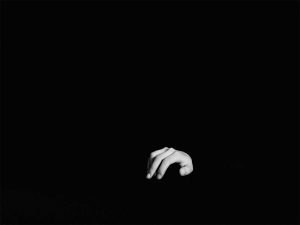
Project: Phenomena

Human beings are separate from nature; the development of human consciousness is an error within the universe and nature. Buddhist philosophy called this “Saṃsāra,” the wandering of humankind through ego, ignorance, and desire.

Human beings‘ perception of nature, when trapped in saṃsāra, becomes distorted to the point that the true meaning or sense of nature becomes increasingly distant from the original phenomenon, to the point of absurdity and imminent contradiction.

Zixi Xia, China
Project: The Seam: Where intimacy is performed

Zixi Xia (b. 2000, China) discovered her passion for photography in 2020 during the pandemic, while pausing her studies at Auckland University of Technology in New Zealand. In 2023, she earned a Certificate in Photography from the Rhode Island School of Design (RISD). She is currently pursuing further studies in Visual Culture at the University of Newcastle, Australia, commencing in 2024.
Her work has been featured in publications such as Impetuous Magazine, ProfiFoto, and Mob Journal. She is also a recipient of international photography and art awards, including the APA AWARDS and various global talent prizes. Alongside these achievements, her work has been presented at renowned art and photography exhibitions and fairs worldwide.
Working primarily through self-portraiture, Zixi explores themes of identity, human relationships, and sensory experience within the contemporary world.
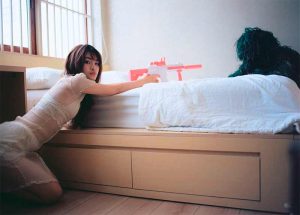
This photographic series takes the hand as its central motif—an anchor in the intimate choreography of self and other. Through staged gestures and performed touch, it investigates identity as a fluid condition, perpetually shaped by proximity and relation.

Within the frame, touch is both an action and a performance: hands reach, hold, hover, and withdraw, mapping emotional terrains of vulnerability, desire, and distance. These gestures are constructed, yet the act of performing them remains inherently genuine. The camera, rather than negating authenticity, relocates it—making truth legible in the tension of a grip, the posture of a reach, the electricity of near-contact.

By fragmenting the body and isolating tactile moments, the images resist complete narrative disclosure. Relationships are suggested as traces left on the skin. When touch turns inward, becoming self-contact, it reveals that intimacy resides not only between bodies, but also within the body’s own sensory awareness. This work posits the performed, photographic gesture as a vital site where identity is continuously felt, negotiated, and remembered.

Serena Phuong An, Vietnam
Project: ‘Know yourself, know your enemy’

Serena is a photographer based between London and Vietnam. Her photographs often begin with a personal experience or persistent thought, exploring how we relate to ourselves and one another, and how these relationships are shaped by other broader external and internal forces. Having grown up between Hanoi, Vietnam and the UK, identify and a sense of belonging also have a large impact on her concepts as well as her inspirations. When working in Vietnam Serena collaborates with talented creative youths in Hanoi and Ho Chi Minh City as a sense of community and support within creative circles is part of her motivation to create. She wishes to highlight the creative scene in Vietnam and showcase the creativity of her peers as well as the artistic visions Vietnam has to offer to the contemporary art scene. 
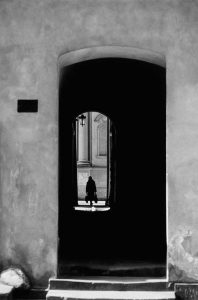
The project began in Ho Chi Minh City after deliberations on the different relationships we build with our inner self, especially the darker parts such as anxiety, depression and self doubt. Through different periods of time the relationship often changes. Often we pretend to ignore these feelings, fear them or try to fight them. Sometimes we get to a point of observation and understanding even acceptance or a willingness to live alongside these parts of ourselves. Somewhere along the way perhaps the most ironic part is that we can even get too comfortable with the sadness living with us and it can quickly become a customary part of our routine or an extension of our person. 

The project started as a small idea for a one-off shoot which Serena quickly realised she wanted to grow into something more in depth. The final project will showcase a collection of photos from each individual shoot taking place in different cities with different teams to explore the diversity of similar issues explored through the eyes of youth across the world. The project was also picked up by cow galerie in Amsterdam through an open call and was on exhibition in Amsterdam and Paris at the end of 2025.

Rainer Junghanns, Germany
Project: Paddling to London _Chapter I

Rainer Junghanns is a Düsseldorf-based artist and curator.
His concept ‚Room by Room‘ develops art strategies that address the demands of our transforming times.
He works internationally with ‚Global Art Projects‘ as a curator for the Ger Jap Museum Schloss Mitsuko, as well as in collaborations with the KP (Korea Photographers) Gallery in Seoul and the Hashi Gallery in Mexico City.

As an artist, he has been nationally and internationally awarded and has been featured in significant exhibitions, most recently at the Busan International Photo Festival 25 and the Jeju Art Biennale 24/25 in Korea.

Project: Paddling to London _Chapter I

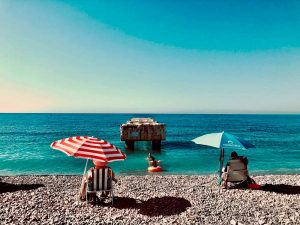
The concept is based on an experience Rainer Junghanns had 35 years ago while standing at the Atlantic Ocean in Bergen aan Zee, looking at the horizon, and falling prey to an optical illusion. This experience has significantly influenced his artistic career.

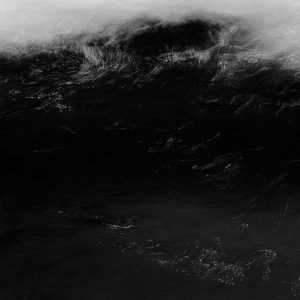
‚What does it mean to explore the conditions of infinite space, to focus on an unstable, sometimes completely vanishing horizon, on the temporal intervals that can oscillate between a staccato of individual moments and the duration of contemplative visual impressions?
And always a comparison – as an act of cognitive assurance, as a result of a fundamental physical uncertainty, as an artistic process.‘